
 Save
Save These chocolate covered orange peels transform simple citrus into an elegant confection. Fresh orange peel strips are blanched to remove bitterness, then slowly simmered in sugar syrup until translucent and tender.
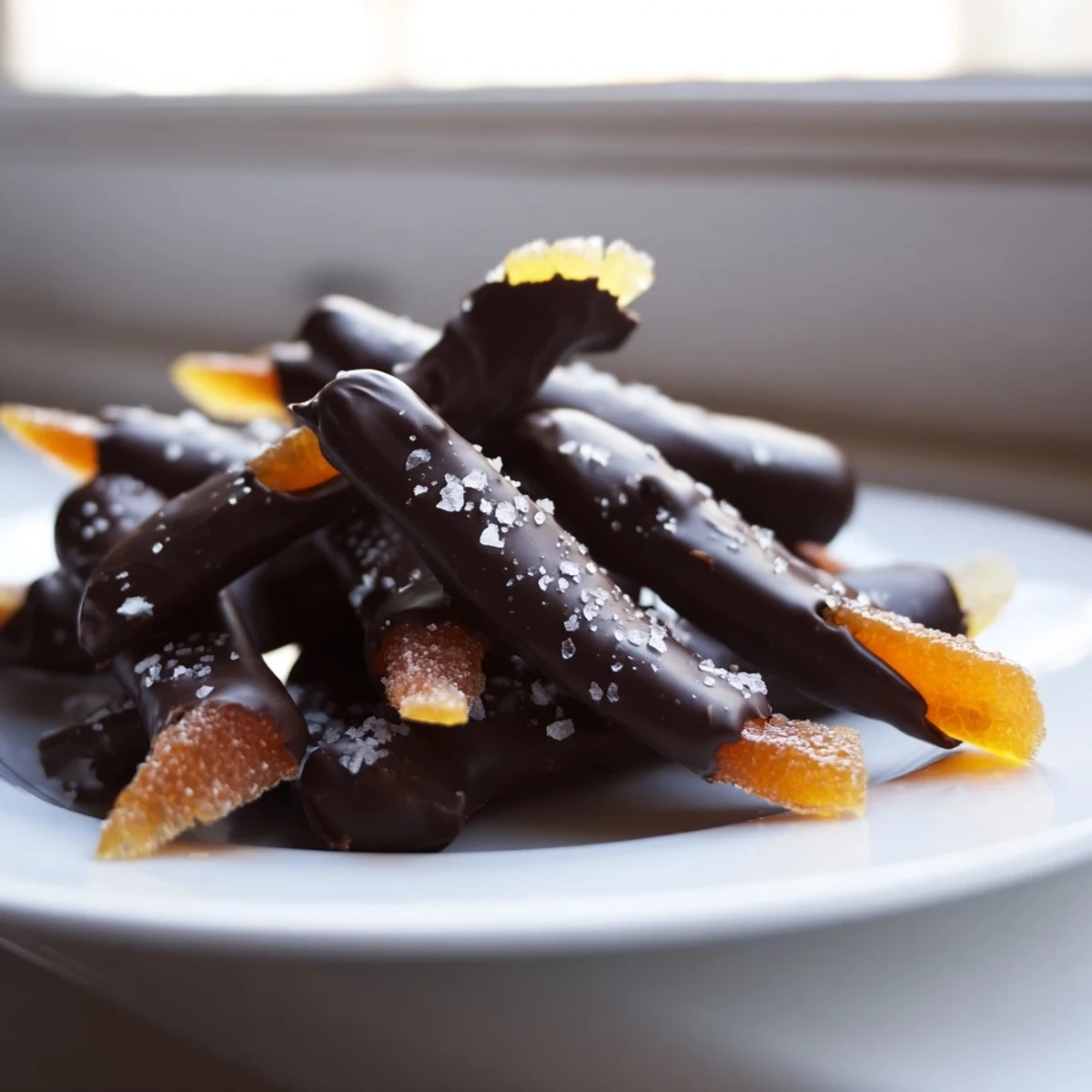
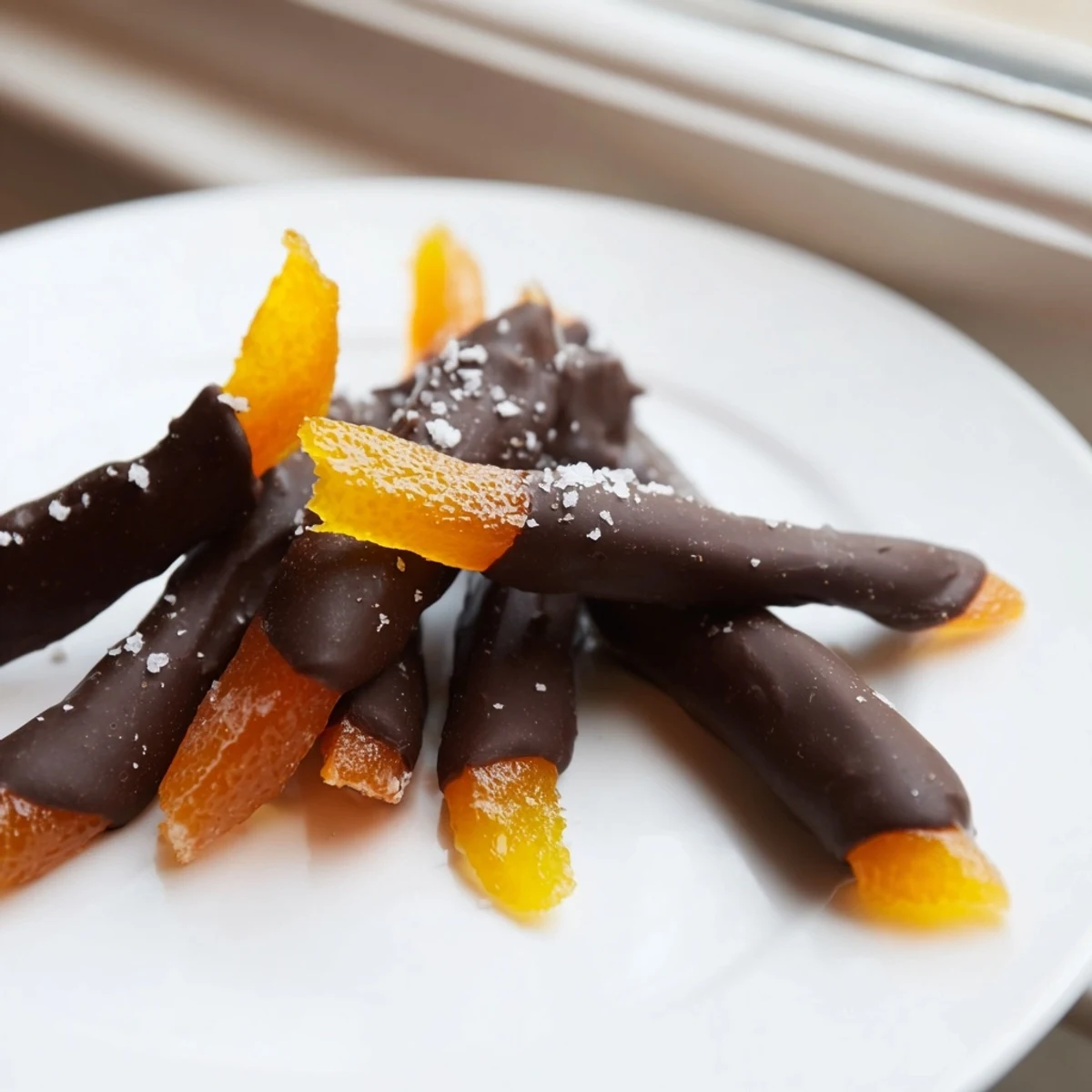
Once dried, each candied strip is dipped halfway into melted dark chocolate and left to set. A sprinkle of flaky sea salt adds a finishing touch. The result is a beautiful balance of bright citrus flavor and rich, bittersweet chocolate.
The smell hit me before I even realized what was happening: oranges hitting boiling water, releasing this sharp sweet perfume that filled my entire kitchen on a rainy Saturday afternoon. I had three oranges sitting on the counter, leftover from a failed marmalade attempt, and something about their stubborn presence dared me to try candying the peels. Two hours later I was standing there with chocolate stained fingers, unable to stop eating them, wondering why I had never done this before.
I brought a tin of these to my neighbors holiday party last December, fully intending to share them as gifts. Instead I stood by the snack table eating half of them myself while making small talk, chocolate melting onto my napkin, completely unrepentant.
Ingredients
- 3 large oranges: Use thick skinned navel oranges if you can find them because they give you wider, more satisfying peels to work with.
- 1 cup (200 g) granulated sugar: Plain white sugar works best here because it lets the orange flavor stay front and center.
- 1 cup (240 ml) water: Combined with the sugar to create the syrup that transforms bitter peels into something jewel like and translucent.
- 200 g high quality dark chocolate (at least 60% cocoa): Spend a little extra on good chocolate because this is one recipe where you will absolutely taste the difference.
- 1 tsp flaky sea salt (optional): A tiny sprinkle of salt on top of each piece adds a crackly finish that people go quiet over.
Instructions
- Prep the oranges:
- Wash the oranges thoroughly under warm water, scrubbing gently to remove any waxy residue. Score each peel from top to bottom in quarters with a sharp knife, then peel them off in large pieces, keeping as much white pith attached as you can because it holds everything together during cooking.
- Cut into strips:
- Slice the peels into even strips about half a centimeter wide, trying to keep them roughly the same size so they all cook at the same rate.
- Blanch the bitterness away:
- Place the strips in a saucepan, cover with cold water, bring to a boil for two minutes, then drain completely. Repeat this process two more times because each round pulls out more of the harsh bitterness and you will taste it if you skip even one.
- Make the syrup:
- Combine the sugar and water in the same saucepan and bring it to a gentle simmer, stirring until the sugar fully dissolves and the liquid runs clear.
- Candy the peels:
- Add the blanched peels to the syrup and let them simmer gently for forty minutes, stirring occasionally, until they turn glossy and translucent like little amber jewels floating in the pot.
- Dry them out:
- Using tongs, transfer each strip to a wire rack set over parchment paper and let them dry for at least one hour until the surface feels tacky but not wet.
- Melt the chocolate:
- Set a heatproof bowl over a saucepan of barely simmering water and melt the chocolate slowly, stirring gently, until it is completely smooth and glossy with no lumps remaining.
- Dip and finish:
- Dip each candied strip halfway into the chocolate, letting the excess drip back into the bowl, then lay them on fresh parchment paper. Sprinkle with flaky sea salt if you like and let them set at room temperature for about thirty minutes until the chocolate firms up.
 Save
Save There is something deeply satisfying about transforming something you would normally throw away into a treat that people assume came from a specialty shop.
Storing Your Chocolate Orange Peels
Keep them in an airtight container at room temperature and they will stay perfect for up to two weeks, though mine have never lasted more than three days. Avoid refrigerating them because moisture will make the chocolate bloom and lose its shine.
Playing With Other Citrus
Grapefruit peels make a wonderfully bitter version that pairs especially well with an after dinner espresso. Lemon peels are brighter and more delicate, almost floral, and look stunning dipped in white chocolate for a lighter variation.
Getting the Chocolate Right
If you want that professional snap when you bite into each piece, tempering the chocolate is worth the extra effort even though it sounds intimidating. I skipped it for years and the taste was still wonderful, but the texture upgrade is real.
- Use a thermometer and aim for about 31 degrees Celsius when working with dark chocolate for tempering.
- Work in small batches so the chocolate stays warm and fluid while you dip.
- Resist the urge to speed up setting by putting them in the fridge because condensation will ruin the finish.
 Save
Save Every time I make these I end up standing in my kitchen, covered in sugar and chocolate, wondering why I do not make them more often. They are a small luxury made from almost nothing, and that might be my favorite kind of cooking.
Recipe FAQs
- → Can I use milk or white chocolate instead of dark chocolate?
-
Yes, you can substitute milk or white chocolate. Keep in mind that milk chocolate will make the peels sweeter, so you may want to reduce the candying time slightly. White chocolate pairs beautifully with the orange flavor but is more delicate to work with.
- → How do I reduce the bitterness in orange peels?
-
The key is blanching. Boil the peels in fresh water, drain, and repeat two to three times. This process draws out the bitter compounds from the white pith while preserving the fragrant oils in the orange zest.
- → How should I store chocolate covered orange peels?
-
Store them in an airtight container at cool room temperature for up to two weeks. In warmer or humid climates, refrigerate them in a sealed container to prevent the chocolate from blooming or the peels from becoming sticky.
- → Can I use other types of citrus?
-
Absolutely. Grapefruit, lemon, and tangerine peels all work well with the same candying and dipping method. Grapefruit peels offer a lovely floral bitterness, while lemon peels give a sharper, brighter flavor.
- → Do I need to temper the chocolate?
-
Tempering is not required but produces a shinier, snappier finish that holds up better at room temperature. If you skip tempering, simply melt the chocolate gently and the peels will still taste delicious with a slightly softer coating.
- → Why are my candied peels not turning translucent?
-
Translucent peels require patience and gentle heat. Simmer them low and slow in the sugar syrup for the full 40 minutes. Avoid rushing with high heat, which can toughen the peels. Also ensure the peels are fully submerged in the syrup throughout cooking.